Authentification Push avec application Esup-Auth
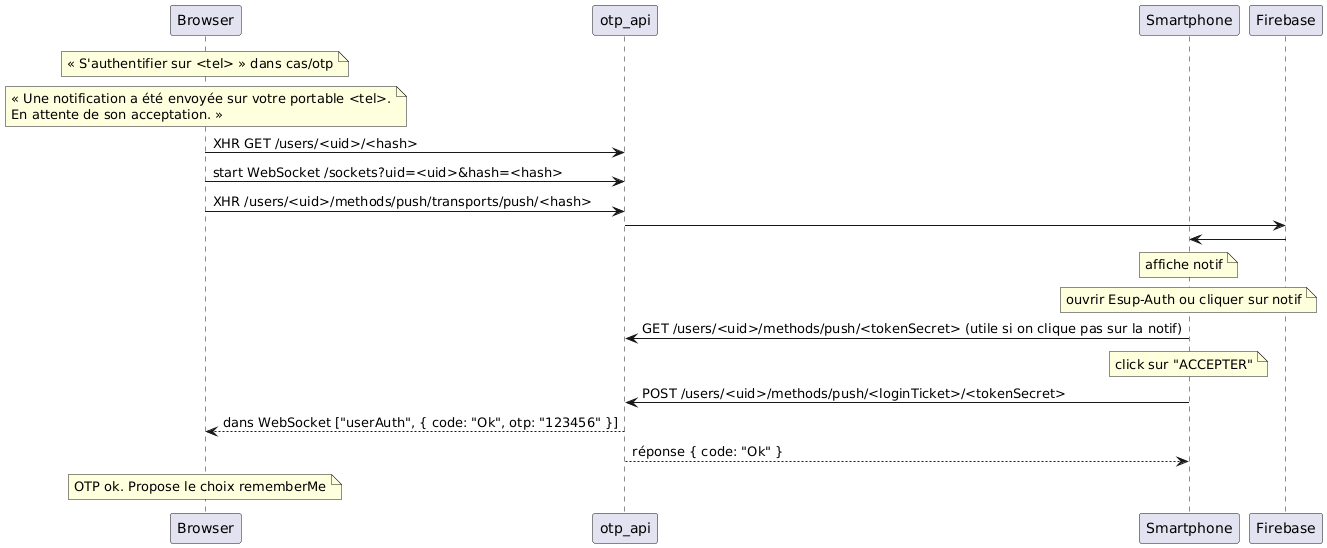

Généré avec plantuml.com avec :
| Bloc de code |
|---|
@startuml note over Browser : « S'authentifier sur <tel> » dans cas/otp note over Browser : « Une notification a été envoyée sur votre portable <tel>.\nEn attente de son acceptation. » Browser -> otp_api: XHR GET /users/<uid>/<hash> Browser -> otp_api: start WebSocket /sockets?uid=<uid>&hash=<hash> Browser -> otp_api: XHR /users/<uid>/methods/push/transports/push/<hash> participant Smartphone otp_api -> Firebase Firebase -> Smartphone note over Smartphone : affiche notif note over Smartphone : ouvrir Esup-Auth ou cliquer sur notif Smartphone -> otp_api: GET /users/<uid>/methods/push/<tokenSecret> (utile si on clique pas sur la notif) note over Smartphone : click sur "ACCEPTER" Smartphone -> otp_api: POST /users/<uid>/methods/push/<loginTicket>/<tokenSecret> otp_api --> Browser: dans WebSocket ["userAuth", { code: "Ok", otp: "123456" }] otp_api --> Smartphone : réponse { code: "Ok" } note over Browser : OTP ok. Propose le choix rememberMe @enduml |
...